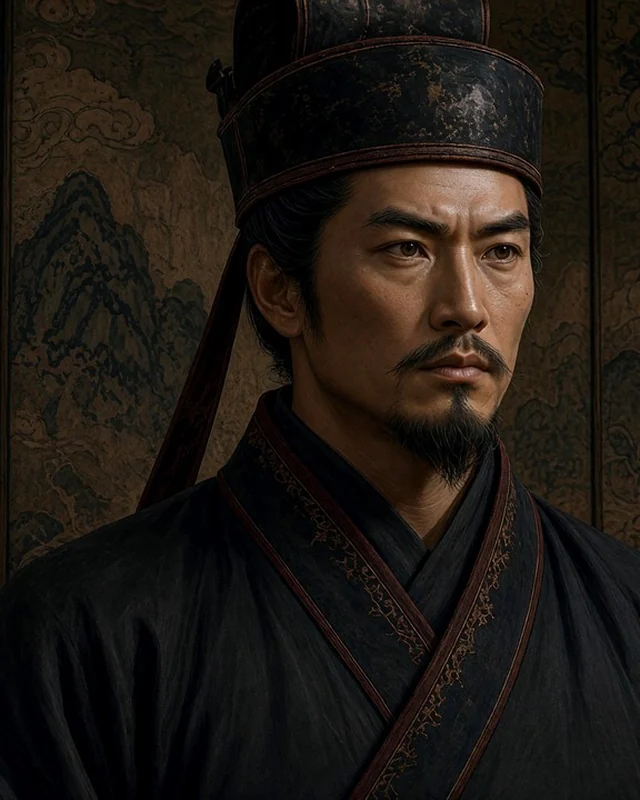
The file on
Qin Shi Huang
First Emperor of China, 259-210 BC
He was born the son of a hostage prince in an enemy city, and he died as the First Emperor of China. In this hour-long episode of The Leader Files Podcast, Mike takes his time with the full life of Qin Shi Huang, born Zheng and often called Ying Zheng, the King of Qin who ended the Warring States period, founded the Qin dynasty in 221 BC and left behind the Terracotta Army. It is a conversational deep dive into ancient China, full of plots, palace scandals and real quotes from the old historians, with honest notes on which stories are legend.
Next, a king at thirteen, with work already starting on his tomb at Mount Li. We cover the Lüshi Chunqiu, the Lao Ai revolt, Lü Buwei's fall, Li Si and his famous rats in the grain barn, and Han Fei, the great thinker of Legalism. Then come the conquests of Han, Zhao, Yan, Wei, Chu and Qi, from the assassination attempt to the flooding of Daliang and General Wang Jian's expensive estimate.
With China unified, Zheng invents the title Huangdi, emperor, swaps feudal lords for commanderies, and carves the jade imperial seal. We look at one script, one coin and one axle width, the standard weights and measures, and what the Shuihudi bamboo slips found in 1975 reveal about real Qin law. Then the building: imperial roads, the Lingqu Canal, General Meng Tian's campaign against the Xiongnu, the first rammed-earth Great Wall line, and the folktale of Lady Meng Jiang.
Finally, his death at Shaqiu in 210 BC, the salted-fish cover-up, the forged letter from Zhao Gao and Li Si, Huhai as Second Emperor, and the deer called a horse. We cover Chen Sheng's uprising, Liu Bang, the burning of Xianyang, the fall of Qin and the rise of the Han dynasty, and Jia Yi's essay The Faults of Qin. Then the farmers who found the Terracotta Warriors in 1974, the four pits, the unopened tomb and its rivers of mercury, his legacy as tyrant and unifier, and how the name China may come from Qin.