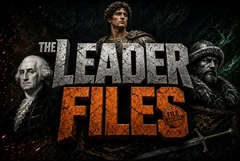
The file on
Genghis Khan
Founder of the Mongol Empire, c. 1162-1227
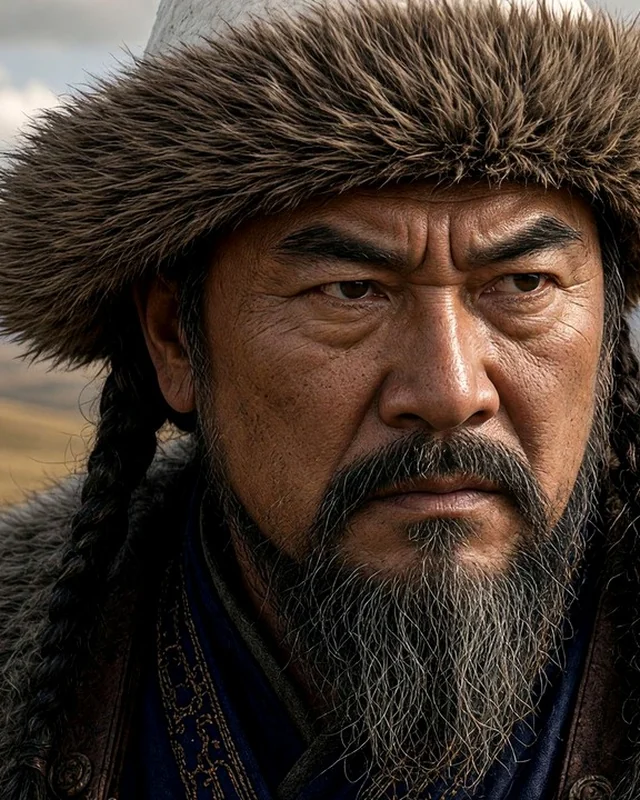
Genghis Khan, born Temujin and known in Mongolia as Chinggis Khaan, grew up abandoned on the steppe, escaped captivity with a wooden cangue locked around his neck, and went on to unite the Mongol tribes and found the Mongol Empire, the largest contiguous land empire in history. In this hour-long episode of The Leader Files Podcast, Mike walks through his whole life using the real words of the medieval sources, The Secret History of the Mongols, the Persian historians Juvaini and Rashid al-Din, and the travel diary of the Daoist master Changchun, with honest notes on where legend takes over and where the sources disagree.
We begin on the Mongolian steppe of the twelfth century: the kidnapping of his mother Hoelun, the birth legend of a baby clutching something in his fist, the betrothal to Borte, and the poisoning of his father Yesugei by the Tatars. Then the hard years: a family left alone to dig roots by the Onon River, the killing of his half-brother Begter, the escape from the Tayichiud and the stranger, Sorkan-Shira, who chose not to give him away, and his first loyal companion, Bo'orchu.
Next comes the rise to power: the sable cloak that won him the protection of Toghrul, the Ong Khan of the Keraits, the Merkit raid and the moonlit rescue of Borte, and his friendship and rivalry with his blood brother Jamukha, from the anda oath to Jamukha's final request. We cover the lost years and the Jin dynasty, the story of how Jebe got his name, the betrayal by Toghrul, the Baljuna Covenant, and the Battle of Chakirmaut against the Naimans.
Finally, the meeting with Changchun and the question of immortality, the quarrel over succession and the choice of Ogedei, the death of Genghis Khan in twelve twenty-seven (and the debate over its cause), the hidden grave near Burkhan Khaldun, and his successors, Kublai Khan, Hulagu and the Pax Mongolica along the Silk Road. We also look at his legacy honestly, from the destruction and the casualty debates to trade, communication, the DNA descendants claim, and why modern Mongolia honors him as its founding father.
Along the way, Mike reacts, reflects and asks the big questions. Was Genghis Khan a nation-builder, a destroyer, or both? Why do Mongolia, Russia, Iran and China remember him so differently? Every quote is attributed to its source.
This is a balanced, family-friendly look at medieval history, the Mongols and Central Asia, made for history lovers, students and anyone curious about the leaders who shaped our world.