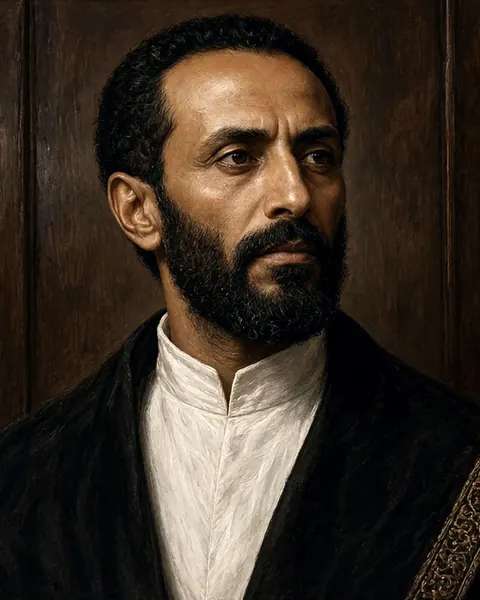
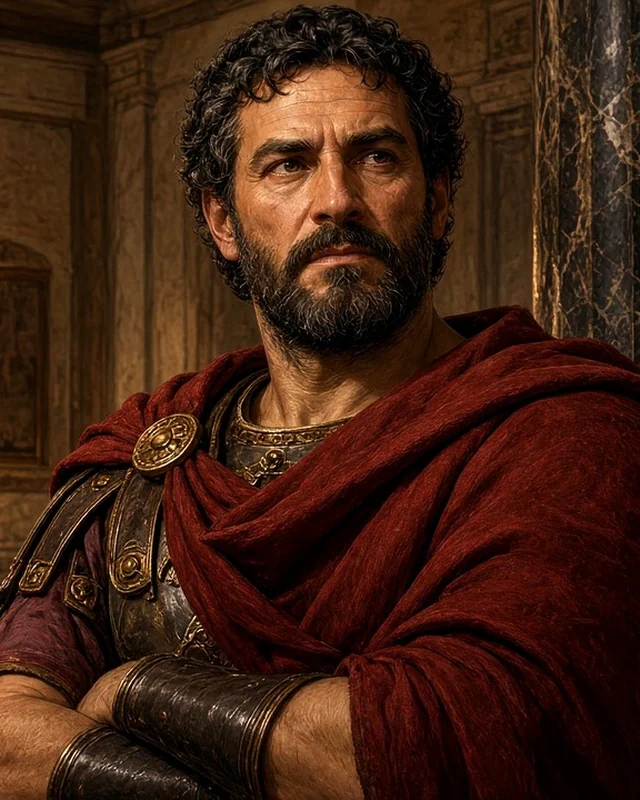
The file on
Augustus Caesar
First Roman Emperor, 63 BC-AD 14
He was a sickly eighteen-year-old student when he learned that Julius Caesar had been killed and had adopted him in his will. Within fifteen years he ruled the Roman world. In this hour-long episode of The Leader Files Podcast, Mike tells the full life of Augustus, born Gaius Octavius, known to historians as Octavian and to later generations as Caesar Augustus, the first Roman emperor and the founder of the Pax Romana. He ended a century of civil war and rebuilt Rome in marble, and he also turned a free republic into a smiling one-man rule that kept the old names on every office. It's a conversational deep dive that keeps both sides in view.
Next, the rise to power. Mark Antony mocks him as a boy who owes everything to a name, Cicero plans to use him and then drop him, a comet is hailed as Caesar's soul, and at nineteen he raises a private army and marches on Rome to become consul. We cover the Second Triumvirate with Antony and Lepidus, the proscriptions and Cicero's death (told without graphic detail), the Battle of Philippi against Brutus and Cassius, the siege of Perusia, Sextus Pompey's war at sea and Agrippa's victory at Naulochus.
After that comes the quiet revolution. In 27 BC he "restores the Republic", takes the name Augustus and becomes princeps, the first citizen. We look at his near-fatal illness and the Second Settlement of 23 BC, his dramatic refusal of the dictatorship, the closing of the Temple of Janus, Virgil's Aeneid, the building programme (he "had found it built of brick and left it in marble"), the Ara Pacis, his marriage laws and Ovid's exile. There's a lighter side too: four winter tunics, a fear of thunder, the Greek Kalends and "quicker than you can cook asparagus."
Finally, the succession tragedies: Marcellus, Agrippa, Gaius and Lucius, Julia's exile and the reluctant choice of Tiberius. Then the Teutoburg Forest disaster ("Quintilius Varus, give me back my legions!"), the Res Gestae, the Alexandrian sailors who cheered him at Puteoli, his last words at Nola in AD 14, and Tacitus's verdict on a peace "stained with blood." It all adds up to a legacy you still name every year: the month of August.