The file on
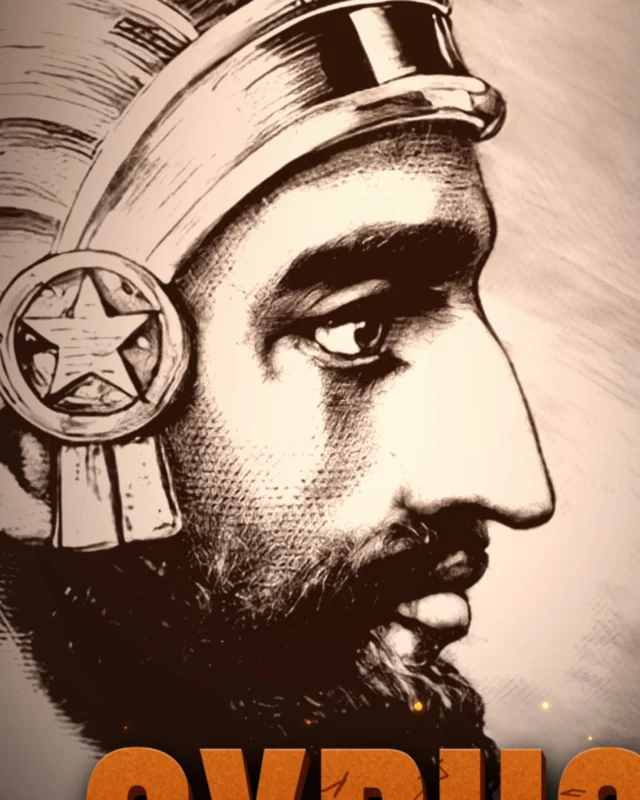
Cyrus the Great
Founder of the Persian Empire, c. 600-530 BC
He conquered more of the world than anyone before him, yet the people he conquered remembered him as "the father." In this hour-long episode of The Leader Files Podcast, Mike tells the full story of Cyrus the Great, founder of the Achaemenid Persian Empire, the king who took Babylon, freed exiles to return home, and left behind the most debated clay cylinder in history. It's a conversational, honest deep dive into ancient Persia, separating what we really know from legend, propaganda and myth.
We start with the sources: Herodotus, who admits he knew three other versions of Cyrus's life, Xenophon's idealized Cyropaedia, Ctesias, the Nabonidus Chronicle, the Cyrus Cylinder and the Hebrew Bible. Then the legend of his birth: King Astyages of the Medes and his dreams, the servant Harpagus who could not kill a baby, the herdsman's wife whose name meant "dog," and the ten-year-old chosen king in a village game.
Next, the real history: the small Persian kingdom of Anshan around 559 BC, Cyrus's family line in his own words, the sickle-and-feast speech that rallied the Persians, and the revolt in which the Median army handed Astyages over to Cyrus around 550 BC. Cyrus spares his rival, absorbs the Medes, and warns that "soft lands breed soft men."
Then Lydia and Croesus, the richest king in the world: Solon's warning, the Delphic oracle that promised he "would destroy a great empire," the camels that panicked the Lydian cavalry at Sardis, the famous scene on the pyre, and Croesus's timeless line, "In peace sons bury their fathers, in war fathers bury their sons." We also cover the Lydian revolt, the Ionian Greeks, the Spartans and his Central Asian campaigns.
The heart of the episode is the fall of Babylon in 539 BC: King Nabonidus and the angry priests of Marduk, the Battle of Opis and the plunder the Chronicle records there, the entry into Babylon "without a battle," and why historians doubt Herodotus's drained-river story. We read the Cyrus Cylinder line by line, from "I am Cyrus, king of the world" to the return of gods and people to their homes, and the Bible's memory of Cyrus in Ezra and Isaiah, where he is called the Lord's "anointed," along with the scholarly debate over the decree.
We look at how Cyrus ruled a world of strangers through local temples and governors, his capital at Pasargadae and the first Persian garden, Queen Cassandane, and Herodotus's verdict: Darius the merchant, Cambyses the master, Cyrus the father. Then Queen Tomyris of the Massagetae and her warning, "be king of your own country," the four ancient versions of Cyrus's death, his humble tomb inscription, Alexander the Great's visit, and the troubled succession that led to Darius.
Finally, the modern Cyrus: the Cylinder's discovery in 1879, the Shah's 1971 claim that it was the first charter of human rights, why many historians disagree, and the fake translation still spreading online. We close with a longer look at what Cyrus can teach us about winning, respect, listening, ambition, propaganda and humility.