The file on
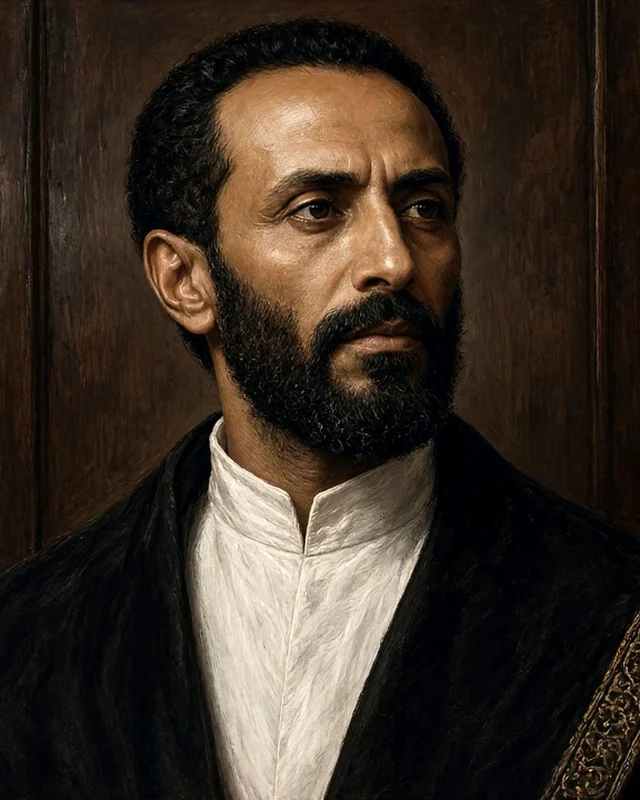
Haile Selassie
Emperor of Ethiopia, 1892-1975
He stood almost alone before the League of Nations and told the world's powers that if they let a small country be swallowed, they would be next. He turned out to be right. In this hour-long episode of The Leader Files Podcast, Mike tells the full life of Haile Selassie, born Tafari Makonnen, known as Ras Tafari and crowned the Conquering Lion of the Tribe of Judah, the last Emperor of Ethiopia. He was a modernizer, a symbol of resistance to Fascism and a father figure of African unity, and also an absolute monarch whose long reign ended in famine and revolution. It is a conversational deep dive that holds both sides together.
As regent beside Empress Zewditu, Ras Tafari brings Ethiopia into the League of Nations in 1923 and tours Europe in 1924, handing out live lions, getting back Emperor Tewodros the Second's crown and adopting forty Armenian orphans who became the imperial brass band. He outmaneuvers his rivals, is crowned Negus in 1928, and in 1930 is crowned Emperor Haile Selassie in Addis Ababa, while in Jamaica the Rastafari movement takes its name from his.
Then the Second Italo-Ethiopian War: Mussolini, the Walwal incident, the Hoare-Laval plan, the Christmas Offensive, banned mustard gas, the Battle of Maychew, a pilgrimage to Lalibela and the decision to go into exile. We hear his 1936 League of Nations speech in Geneva, his question "What reply shall I have to take back to my people?" and "It is us today. It will be you tomorrow." Then exile at Fairfield House in Bath, the Ethiopian Patriots, Orde Wingate and Gideon Force, his return to Addis Ababa on 5 May 1941, five years to the day, and his telegram to Churchill.
Next, the reform years and the tight grip: the abolition of slavery, Ethiopian Airlines, the university, an Ethiopian Patriarch, Abebe Bikila's barefoot Olympic marathon, the Kagnew Battalions in Korea, the 1955 constitution, controlled press and no political parties, and the Eritrea federation and its 1962 annexation. We cover the 1960 Imperial Bodyguard coup attempt, the founding of the Organisation of African Unity in 1963, now the African Union, and his 1963 United Nations speech later adapted by Bob Marley in the song War.
We visit Jamaica in 1966, with the crowd at Palisadoes airport, Mortimer Planno and Grounation Day, told with respect for Rastafari faith. Finally the hardest chapters: the Wollo famine, Jonathan Dimbleby's The Unknown Famine, the creeping coup of 1974, the Derg, his overthrow, his death in 1975 and why its cause is still disputed, his reburial at Holy Trinity Cathedral in 2000, and a legacy still argued over in Ethiopia, Eritrea and beyond.